
Diabetic Foot Care in Laguna Woods CA
Protect Your Feet Before Small Problems Become Serious
We evaluate your skin, nails, circulation, sensation, and pressure areas to help identify foot problems early and reduce the risk of complications.

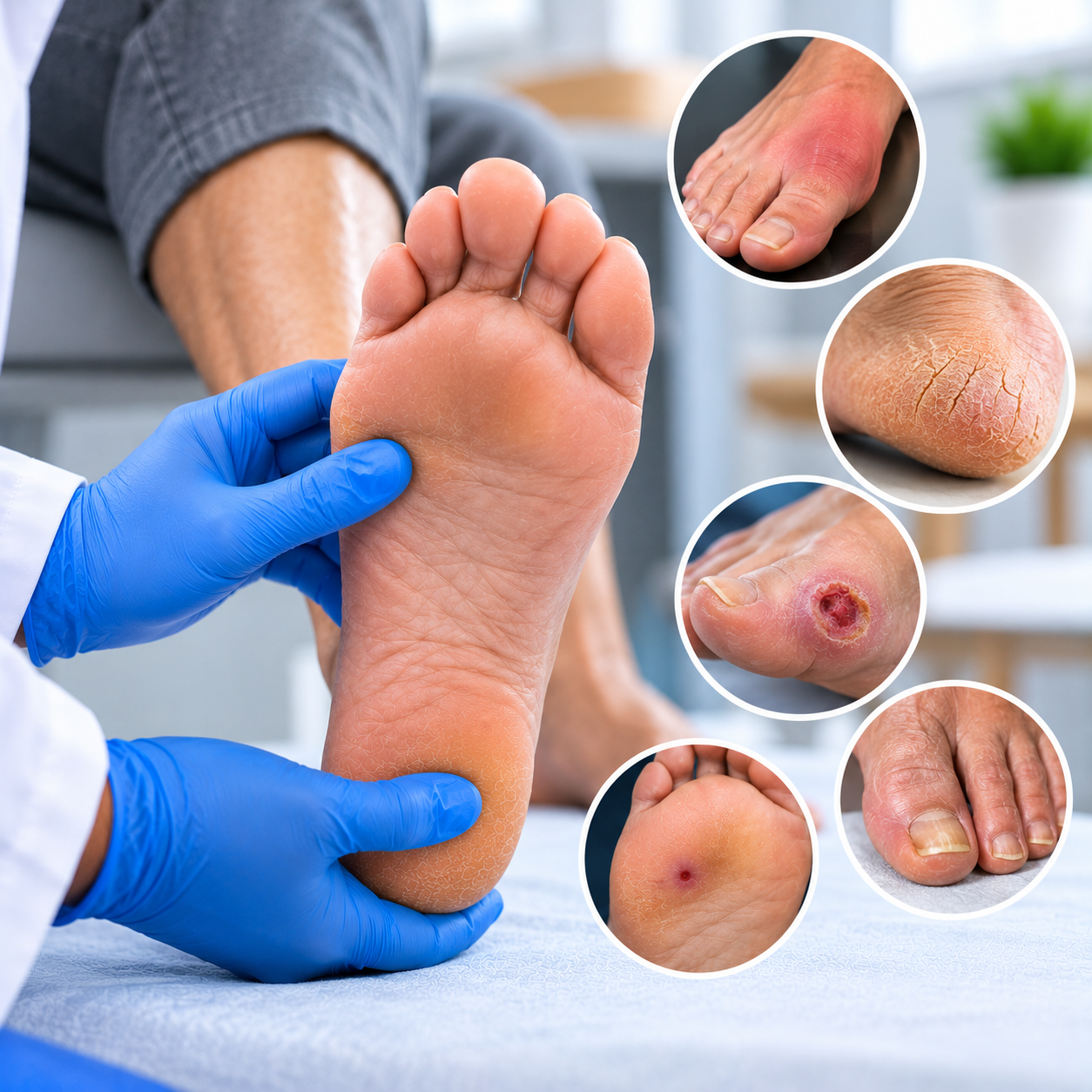
Does This Sound Familiar?
- Numbness or reduced feeling in your feet
- Burning, tingling, or unusual sensitivity
- Cuts, blisters, or sores that heal slowly
- Dry, cracked, or changing skin
- Swelling, redness, or unusual warmth
- Corns, calluses, or nail problems that keep returning
Why Does Diabetes Affect the Feet?
Diabetes can affect the nerves, circulation, skin, and structure of the feet. These changes may allow a small problem to worsen before you realize it is there.

Reduced Sensation
Diabetic neuropathy can make it difficult to feel pain, pressure, heat, cold, or a developing injury.
Poor Circulation
Reduced blood flow can make it harder for wounds to heal and for the body to fight infection.
Unnoticed Injuries
A blister, cut, or object inside a shoe may cause damage without creating noticeable pain.
Pressure Areas
Changes in foot shape or walking patterns can create concentrated pressure that may lead to calluses or skin breakdown.
Dry or Cracked Skin
Diabetes-related nerve changes can reduce natural moisture and make the skin more likely to crack.
Nail and Skin Conditions
Ingrown toenails, fungal infections, corns, and calluses may create openings where infection can develop.
What Happens During a Diabetic Foot Evaluation?
Regular evaluations can help identify changes in sensation, circulation, skin, and foot structure before complications become more serious.
1. Review Your Foot Health
Dr. Petersen will ask about diabetes management, previous wounds, numbness, pain, footwear, and changes you’ve noticed.
2. Examine Your Feet
He’ll examine your skin, nails, pressure areas, foot shape, swelling, temperature, and any cuts, sores, or calluses.
3. Check Sensation and Circulation
Simple in-office testing may be used to evaluate feeling and blood flow in your feet.


A Different Approach to Diabetic Foot Care
We do not wait for a foot problem to become painful because diabetes may reduce your ability to feel an injury. Dr. Petersen focuses on early detection, pressure management, skin and nail health, and personalized guidance based on your individual risks.
Find Problems Before They Become Serious
Regular foot evaluations can identify wounds, pressure areas, circulation changes, reduced sensation, and infections that may otherwise go unnoticed. Early care can help protect the skin and reduce the risk of more serious complications.
Why Choose Dr. Petersen?
Dr. David Petersen has provided podiatric care to patients in Orange County and Los Angeles since 1998. He evaluates each patient’s foot health and individual risk factors before recommending care.
His education and advanced training include:
- Doctor of Podiatric Medicine degree
- Residency training in podiatric medicine and foot surgery
- Two-year fellowship in advanced foot and ankle surgery
- Experience managing common and complex foot conditions
Patients receive clear explanations about examination findings, risk factors, available options, and appropriate next steps.
Trusted by Local Patients
★★★★★ 4.9 / 5 · 120+ reviews



What Patients Are Saying


 Trustindex verifies that the original source of the review is Google.
 Trustindex verifies that the original source of the review is Google.
 Trustindex verifies that the original source of the review is Google.
 Trustindex verifies that the original source of the review is Google.
 Trustindex verifies that the original source of the review is Google.
 Trustindex verifies that the original source of the review is Google.
 Trustindex verifies that the original source of the review is Google.
 Trustindex verifies that the original source of the review is Google.
When Should You See a Podiatrist for Diabetic Foot Care?
People with diabetes should arrange regular foot evaluations and seek prompt care whenever a new injury, skin change, or infection concern appears.
Contact the office promptly if:
- You discover a cut, blister, sore, or open wound
- A wound is not healing as expected
- Redness, warmth, swelling, drainage, or odor develops
- A toenail becomes ingrown, thickened, or infected
- A corn or callus becomes painful or changes
- You notice new numbness, burning, tingling, or discoloration
Seek immediate medical attention for blackened tissue, rapidly spreading redness, fever with a foot wound, or a severely swollen, hot, or deformed foot.
Frequently Asked Questions About Diabetic Foot Care
Check your feet every day for cuts, blisters, redness, swelling, cracks, drainage, and nail changes. Use a mirror or ask someone for help if you cannot see the bottoms of your feet.
Yes. Diabetic neuropathy can reduce your ability to feel pain, heat, cold, or pressure. A wound or infection may worsen without causing the discomfort you would normally expect.
The appropriate schedule depends on your circulation, sensation, previous wounds, foot structure, and other risk factors. Dr. Petersen can recommend an examination schedule based on your needs.
Some people can safely trim their nails straight across, but professional care may be safer if the nails are thick, difficult to reach, or if sensation or circulation is reduced. Do not cut into the corners.
No. Cutting a corn or callus or using medicated removal products can damage the skin and cause a wound or infection. Have the area evaluated and treated professionally.
Walking barefoot increases the risk of cuts, burns, punctures, and other injuries that may go unnoticed. Wear properly fitting shoes or protective footwear indoors and outdoors.
Seek prompt care for an open sore, drainage, spreading redness, warmth, swelling, discoloration, or a wound that is not healing. Severe infection signs, black tissue, or sudden deformity require immediate medical attention.
Take the Next Step in Protecting Your Feet
If you have diabetes or have noticed a new foot concern, schedule an evaluation with Dr. Petersen. He’ll assess your foot health, identify potential risks, and recommend appropriate preventive or follow-up care.