
Callus and Corn Treatment in Laguna Woods CA
Reduce Painful Pressure and Walk More Comfortably
We identify what is causing repeated friction or pressure and provide appropriate care to protect your skin and improve foot comfort.
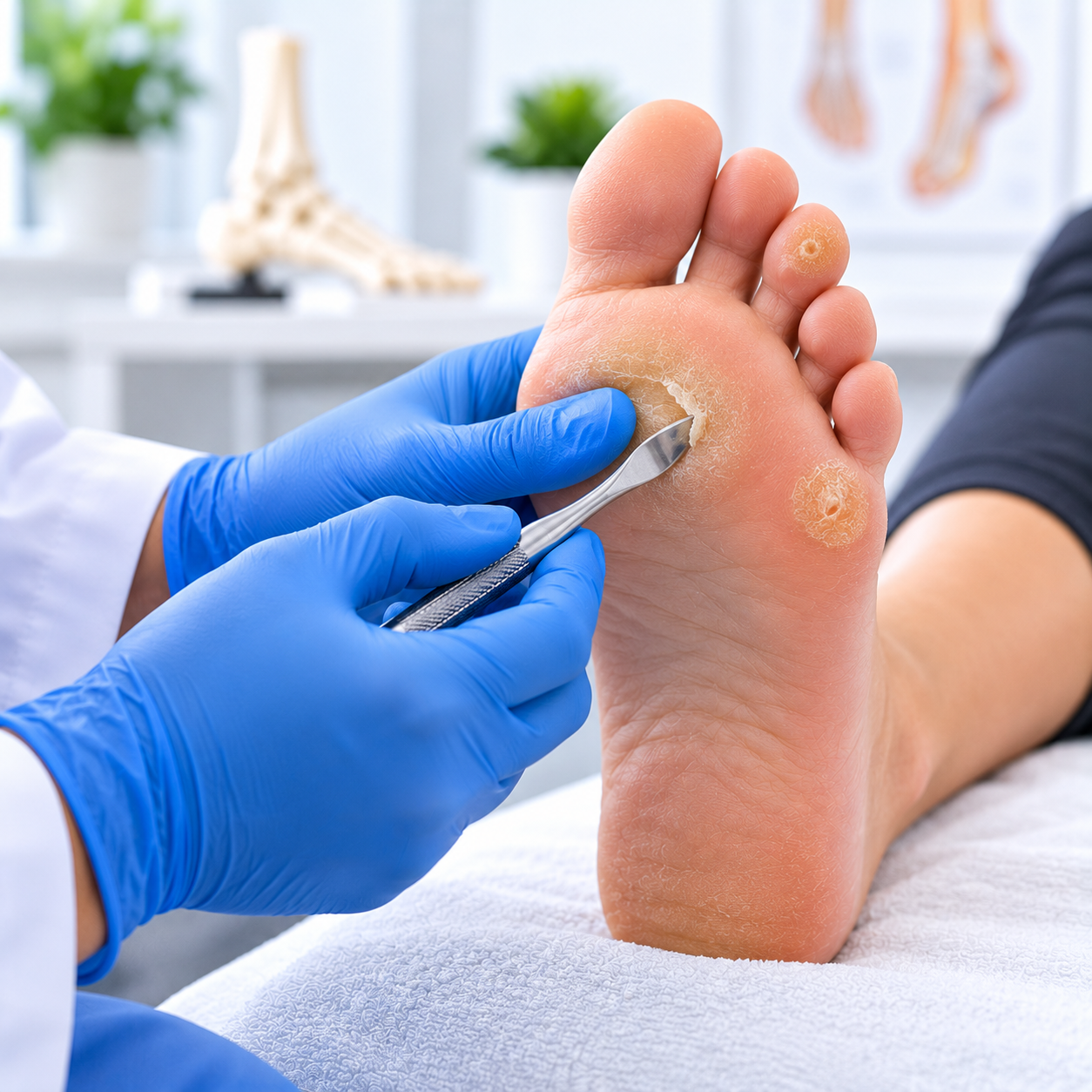
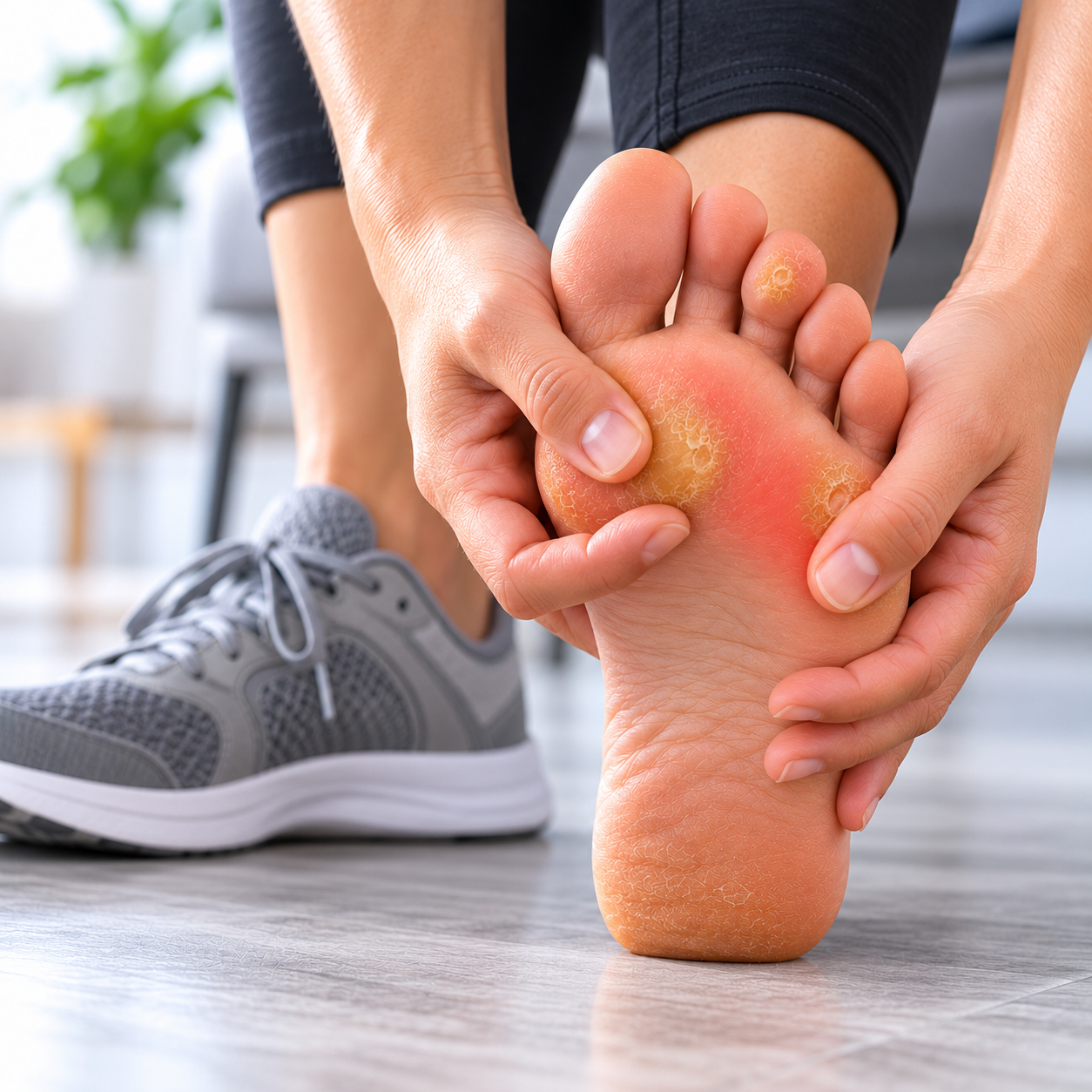
Does This Sound Familiar?
- A thickened area of skin on your foot
- A small, hard spot with a central core
- Pain when standing, walking, or wearing shoes
- Tenderness when pressing the affected area
- Skin buildup on a toe or ball of the foot
- A corn or callus that keeps returning
What Might Be Causing Your Corns or Calluses?
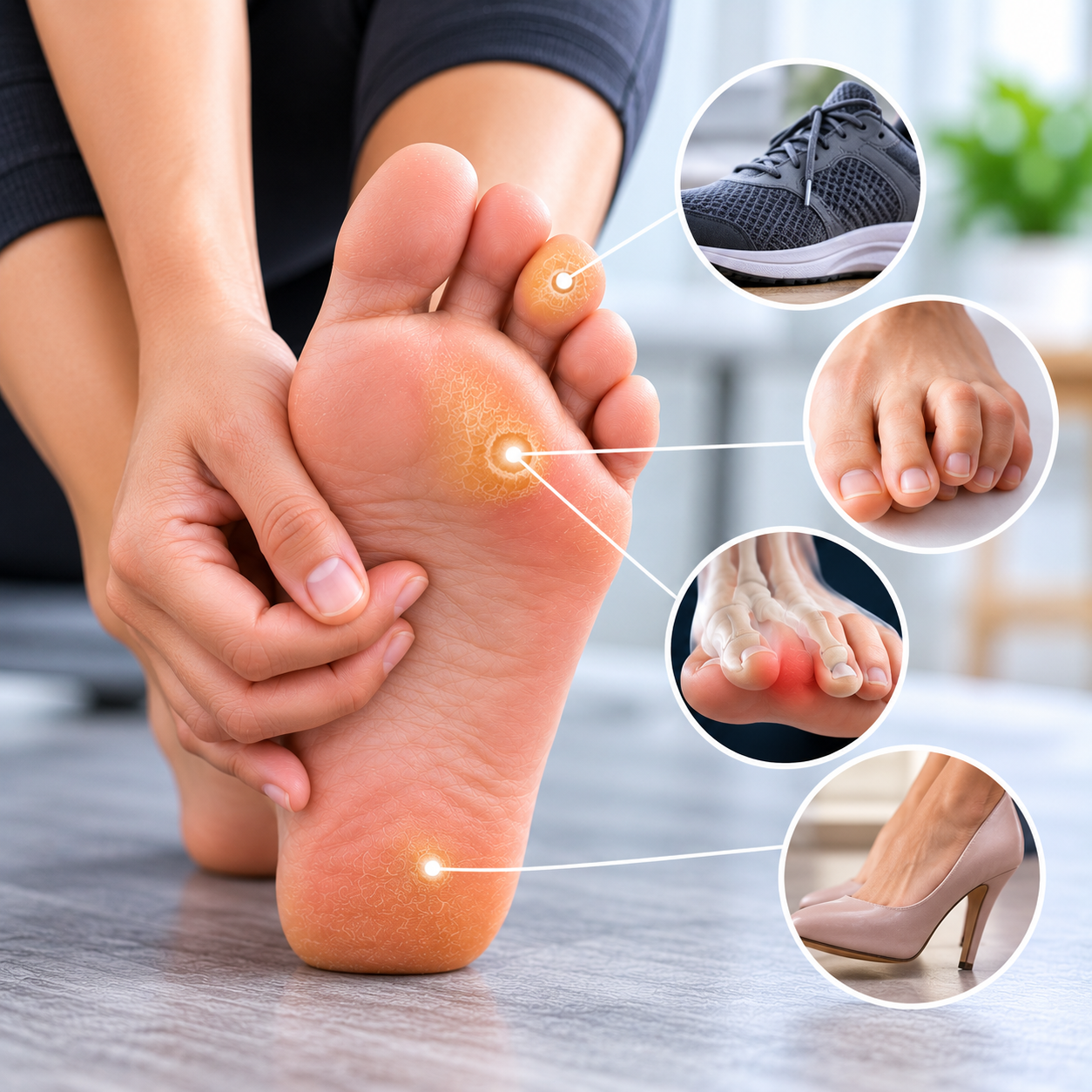
Corns and calluses develop when the skin protects itself against repeated pressure or rubbing. Their location can provide useful information about what is causing the irritation.
Poorly Fitting Shoes
Shoes that are too tight, too loose, or narrow around the toes can create repeated friction and pressure.
Repetitive Activity
Walking, standing, running, or other activities may increase pressure on specific areas of the foot.
Hammertoes
Bent toe joints may rub against the inside of a shoe and cause painful corns to form.
Bunions
Changes in toe alignment can create new pressure points and contribute to thickened skin.
Foot Structure
The shape of your foot may place more pressure on certain toes or areas along the sole.
Changes in Walking
An uneven walking pattern can shift body weight and create recurring areas of pressure.
How Are Corns and Calluses Diagnosed?
Because some skin growths can look similar, an accurate evaluation is important before treatment begins.
1. Discuss Your Symptoms
Dr. Petersen will ask when the skin buildup appeared, whether it is painful, and which shoes or activities affect it.
2. Examine Your Foot
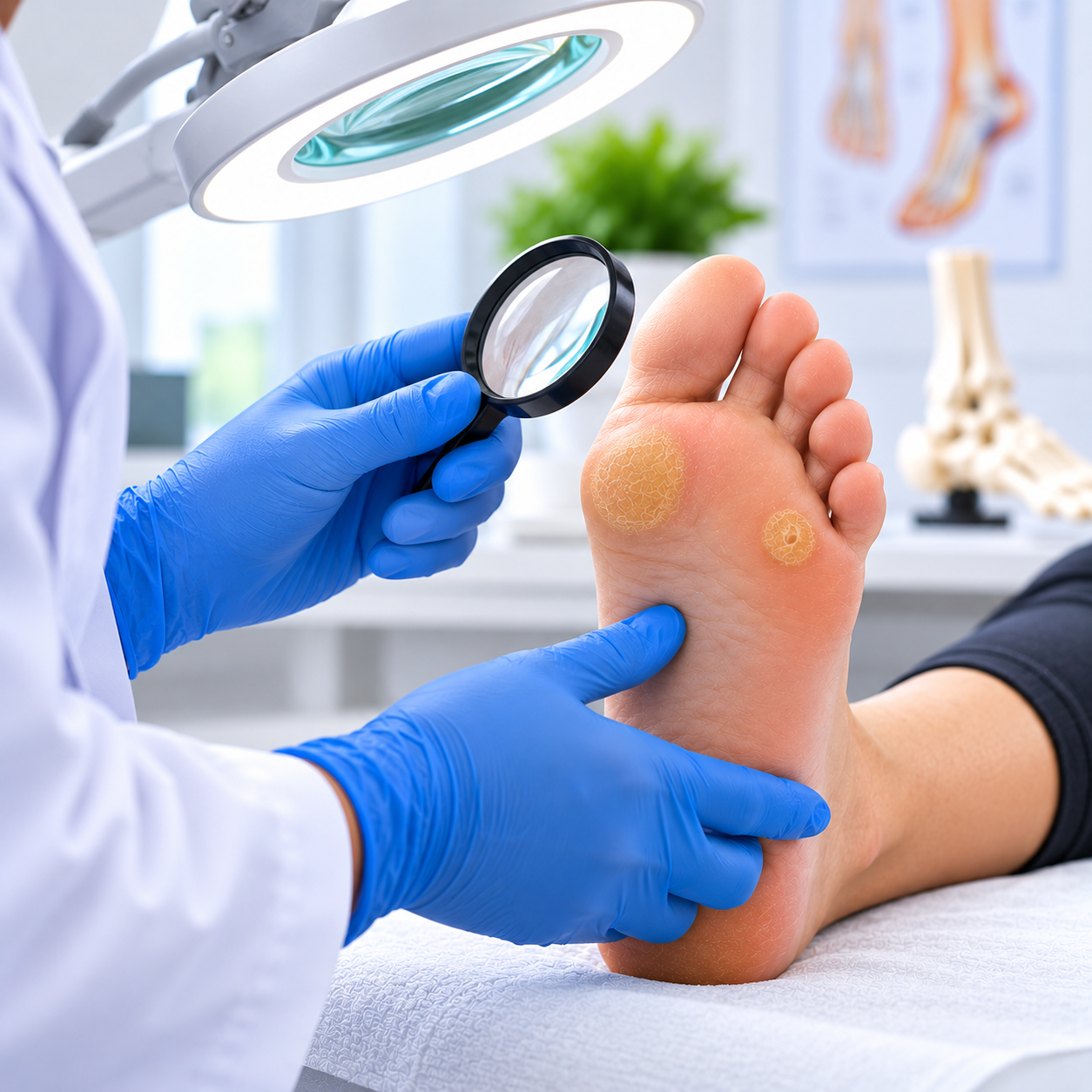
He’ll examine the skin, pressure point, footwear pattern, foot structure, and any underlying toe or joint changes.
3. Testing, if Needed
Additional evaluation may be recommended when the area does not have the typical appearance of a corn or callus.
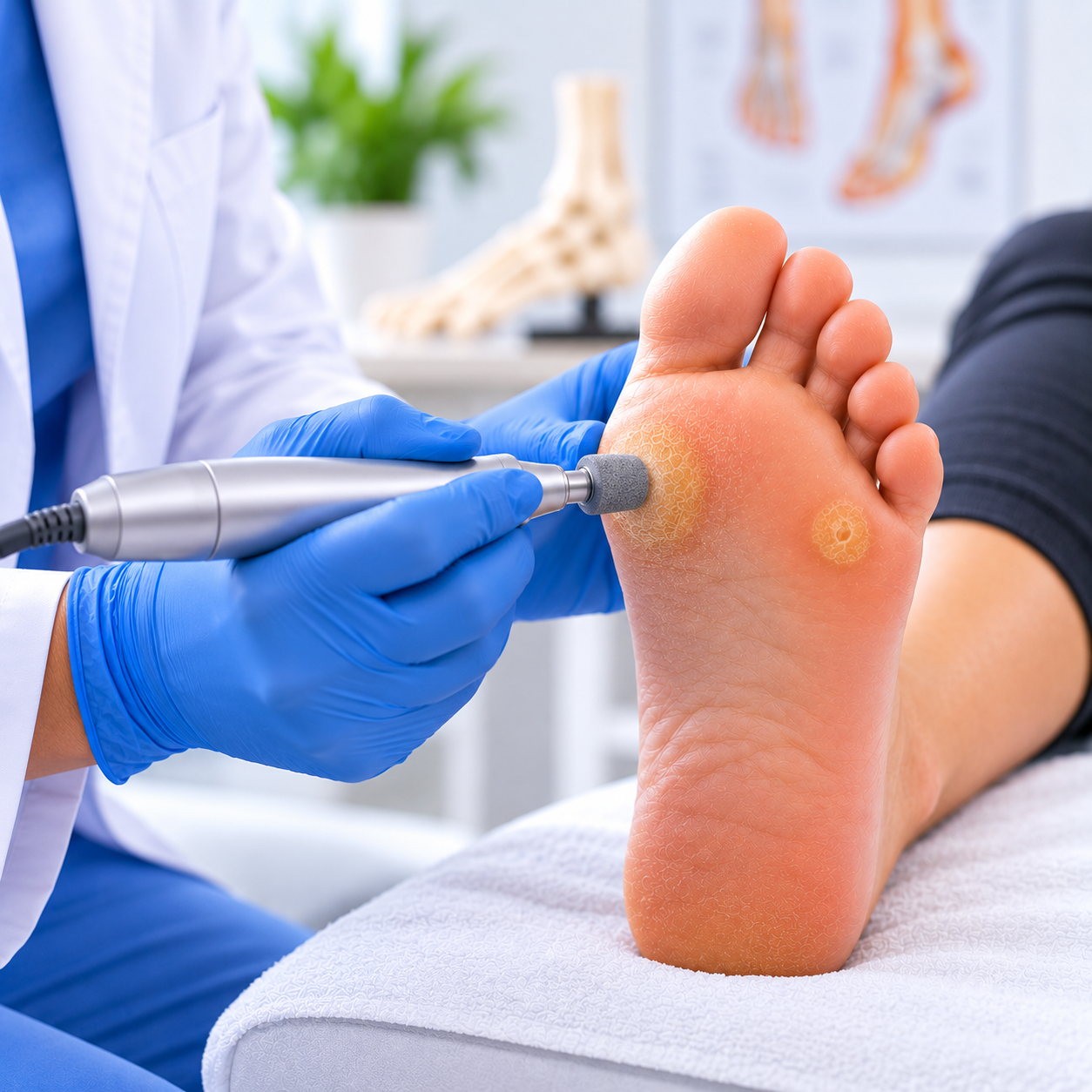
A Different Approach to Corn and Callus Treatment
We look for the pressure or friction causing the skin buildup rather than only removing the thickened skin. Dr. Petersen develops a personalized plan based on the area involved, your foot structure, footwear, walking pattern, and overall health.
Reduce Pressure at the Source
Custom Orthotics may help redistribute weight and reduce repeated pressure on eligible areas of the foot. Addressing the pressure source may help keep painful skin buildup from returning as quickly.
Why Choose Dr. Petersen?
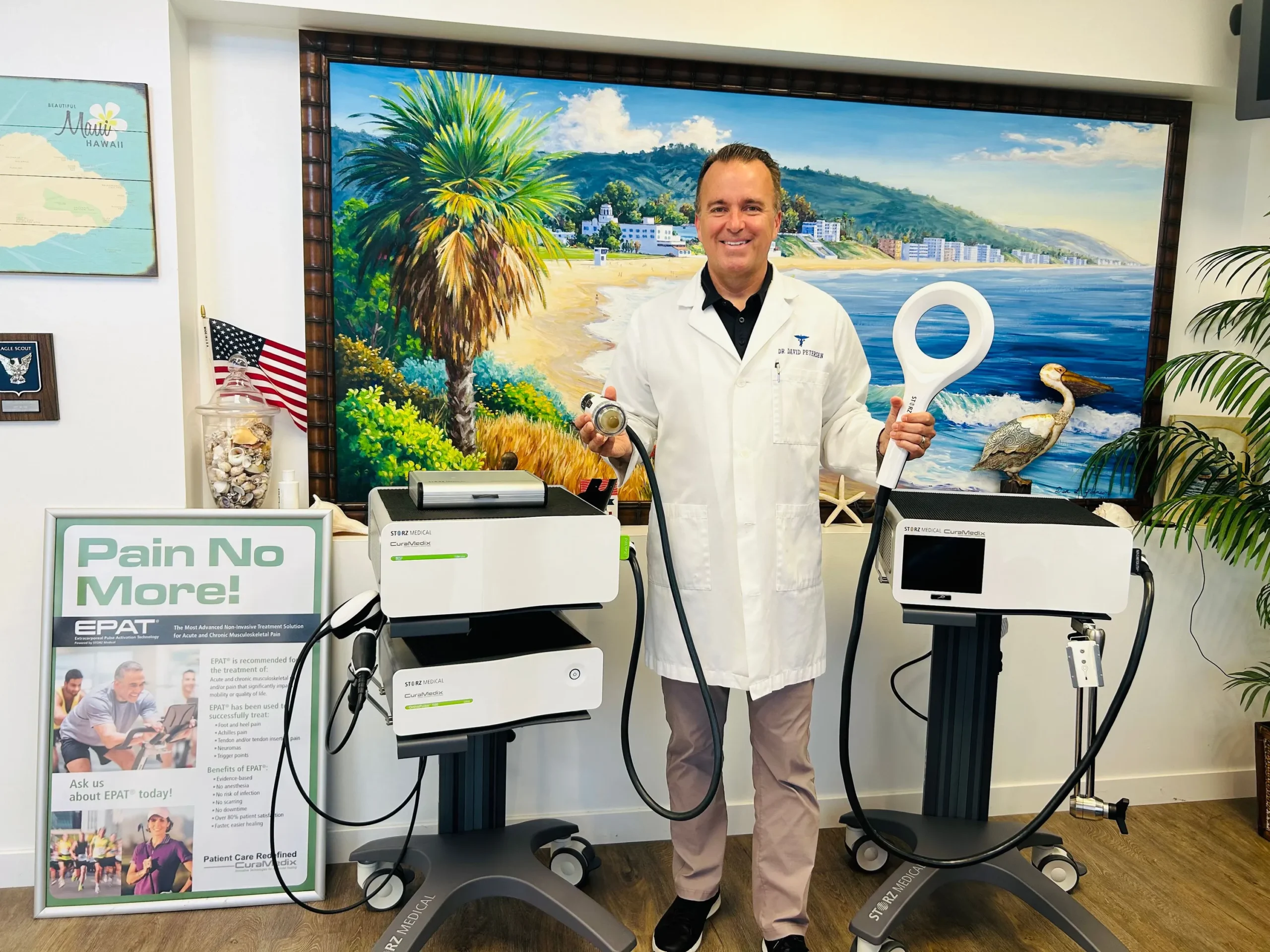
Dr. David Petersen has provided podiatric care to patients in Orange County and Los Angeles since 1998. He evaluates the underlying cause of each patient’s symptoms before recommending a treatment plan.
His education and advanced training include:
- Doctor of Podiatric Medicine degree
- Residency training in podiatric medicine and foot surgery
- Two-year fellowship in advanced foot and ankle surgery
- Experience with conservative and surgical treatment options
Patients receive clear explanations about their diagnosis, available options, expected outcomes, and appropriate next steps.
Trusted by Local Patients
★★★★★ 4.9 / 5 · 120+ reviews
What Patients Are Saying


 Trustindex verifies that the original source of the review is Google.
 Trustindex verifies that the original source of the review is Google.
 Trustindex verifies that the original source of the review is Google.
 Trustindex verifies that the original source of the review is Google.
 Trustindex verifies that the original source of the review is Google.
 Trustindex verifies that the original source of the review is Google.
 Trustindex verifies that the original source of the review is Google.
 Trustindex verifies that the original source of the review is Google.
When Should You See a Podiatrist for Corns or Calluses?
Schedule an evaluation when a corn or callus becomes painful, repeatedly returns, or begins affecting walking and footwear.
Seek professional care if:
- The area becomes increasingly painful or tender
- The skin cracks, bleeds, or develops an open sore
- Redness, warmth, swelling, or drainage appears
- The corn or callus repeatedly returns after removal
- You are unsure whether the growth is thickened skin
- You have diabetes, poor circulation, or reduced sensation
Do not cut away a corn or callus yourself or use medicated corn-removal pads without professional guidance.
Frequently Asked Questions About Corns and Calluses
A corn is usually a smaller circular area of thickened skin with a hard central core. A callus is generally broader and develops over an area exposed to repeated pressure or rubbing.
They often return when the underlying pressure or friction has not been corrected. Footwear, foot structure, toe deformities, and walking patterns may continue irritating the same area.
No. Cutting thickened skin can cause bleeding, wounds, and infection. Professional care is particularly important if you have diabetes, poor circulation, or reduced sensation.
Medicated pads may contain acids that can damage healthy surrounding skin. Ask a podiatrist whether any over-the-counter treatment is appropriate before applying it.
Custom Orthotics may redistribute pressure when foot structure or movement contributes to recurring calluses. They are not necessary for every patient, so an evaluation is needed.
Diabetes can reduce sensation and circulation, making pressure injuries harder to notice and slower to heal. A corn or callus may break down and develop into a wound without causing obvious pain.
See a podiatrist when the area is painful, repeatedly returns, changes appearance, or affects walking. Seek prompt care if the skin opens or shows possible signs of infection.
Take the Next Step Toward More Comfortable Feet
If a painful corn or callus is making walking or wearing shoes uncomfortable, schedule an evaluation with Dr. Petersen. He’ll identify what is causing the pressure and recommend appropriate care.