
Achilles Tendon Pain and Tendonitis Treatment in Laguna Woods CA
Move More Comfortably Without Achilles Pain Holding You Back
We identify what may be straining your Achilles tendon and provide personalized care to support healing and help you return to regular activities.

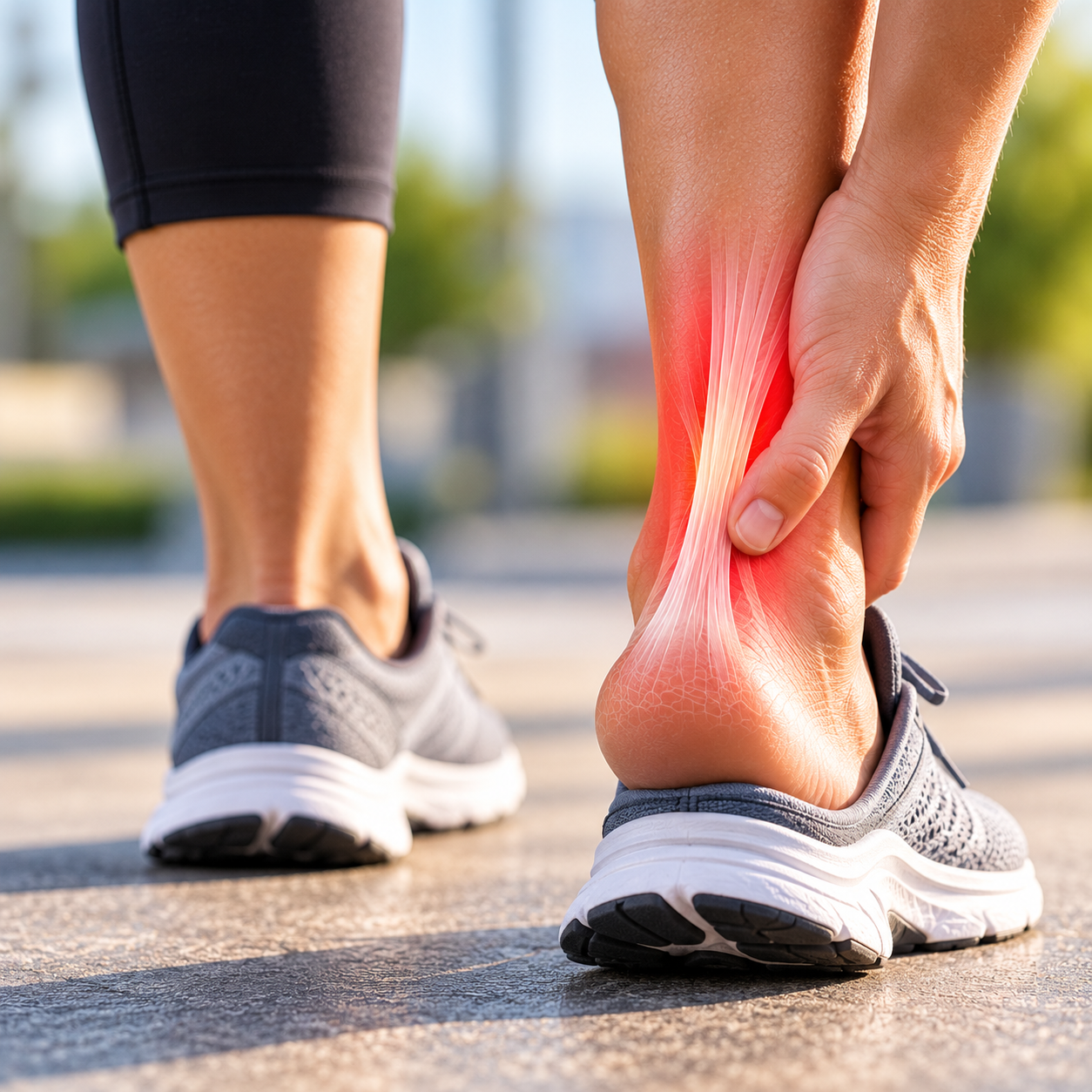
Does This Sound Familiar?
- Pain or aching behind your ankle
- Stiffness during your first morning steps
- Tenderness when pressing along the tendon
- Pain that worsens during or after activity
- Swelling or thickening above the heel
- Difficulty pushing off when walking or running
What Might Be Causing Your Achilles Tendon Pain?
The Achilles tendon connects the calf muscles to the heel bone and helps lift the heel during movement. Repeated or excessive stress can irritate or damage the tendon.

Sudden Activity Increases
Quickly increasing the distance, speed, or intensity of exercise can place more stress on the tendon than it can manage.
Repetitive Overuse
Running, jumping, prolonged walking, or physically demanding work may repeatedly strain the Achilles tendon.
Limited Flexibility
Tight calf muscles or reduced ankle movement can increase tension through the tendon during activity.
Foot Mechanics
Excessive inward rolling of the foot or other movement patterns may place additional demands on the Achilles tendon.
Unsupportive Footwear
Shoes that lack suitable stability or support may contribute to repeated stress during walking, work, or exercise.
Tendon Degeneration
Repeated strain over time can weaken the tendon’s structure and lead to persistent pain, thickening, or small areas of damage.
How Is Achilles Tendon Pain Diagnosed?
Because Achilles pain can involve inflammation, degeneration, or a tear, an accurate evaluation is important before treatment begins.
1. Discuss Your Symptoms
Dr. Petersen will ask when the pain began, which activities affect it, and whether you experienced a specific injury.
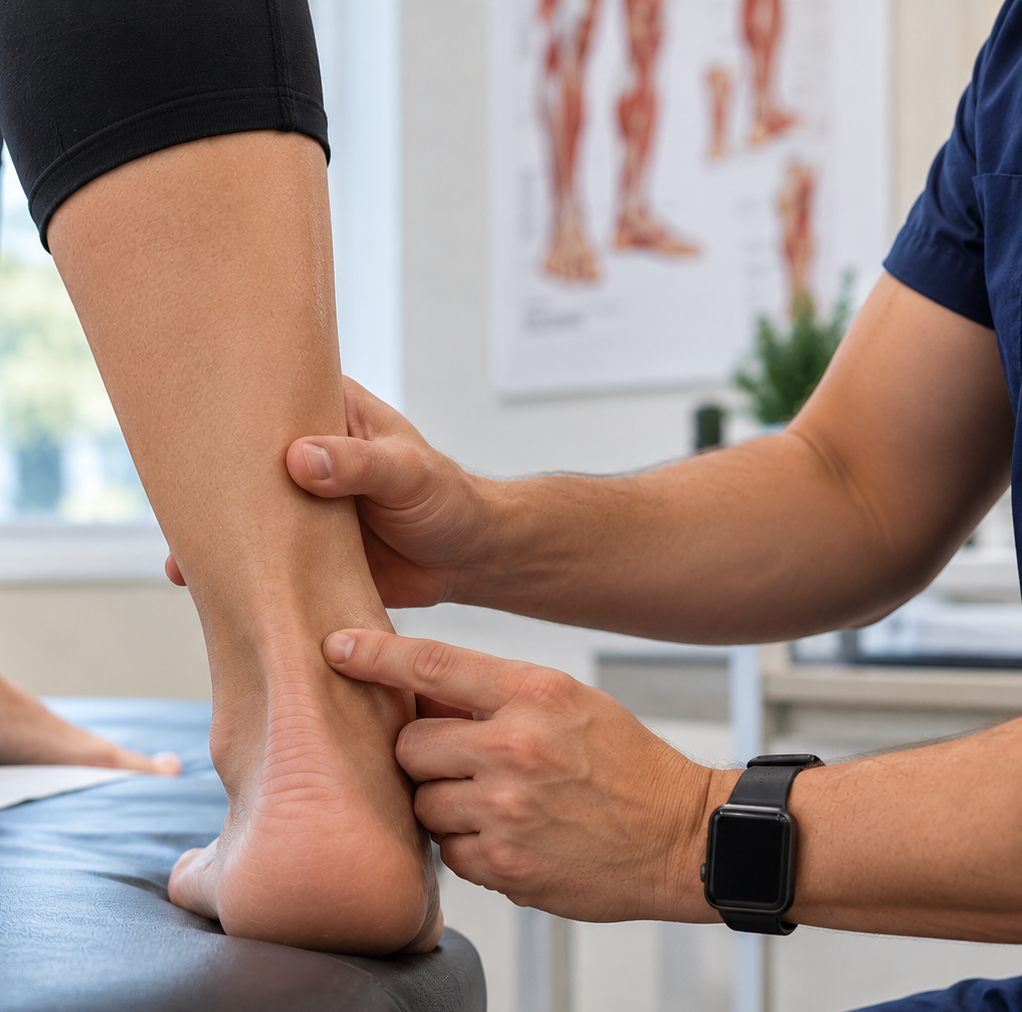
2. Examine Your Foot and Ankle
He’ll evaluate the tendon’s tenderness, thickness, strength, flexibility, movement, and response to pressure.
3. Imaging, if Needed
Digital X-rays or additional imaging may be used to evaluate the affected area and determine the extent of the condition.

A Different Approach to Achilles Tendon Treatment
We focus on identifying why the tendon is overloaded rather than only reducing the pain temporarily. Dr. Petersen develops a personalized plan based on the condition of the tendon, your movement, activity level, symptoms, and treatment history.
Support Healing Without Surgery or Injections
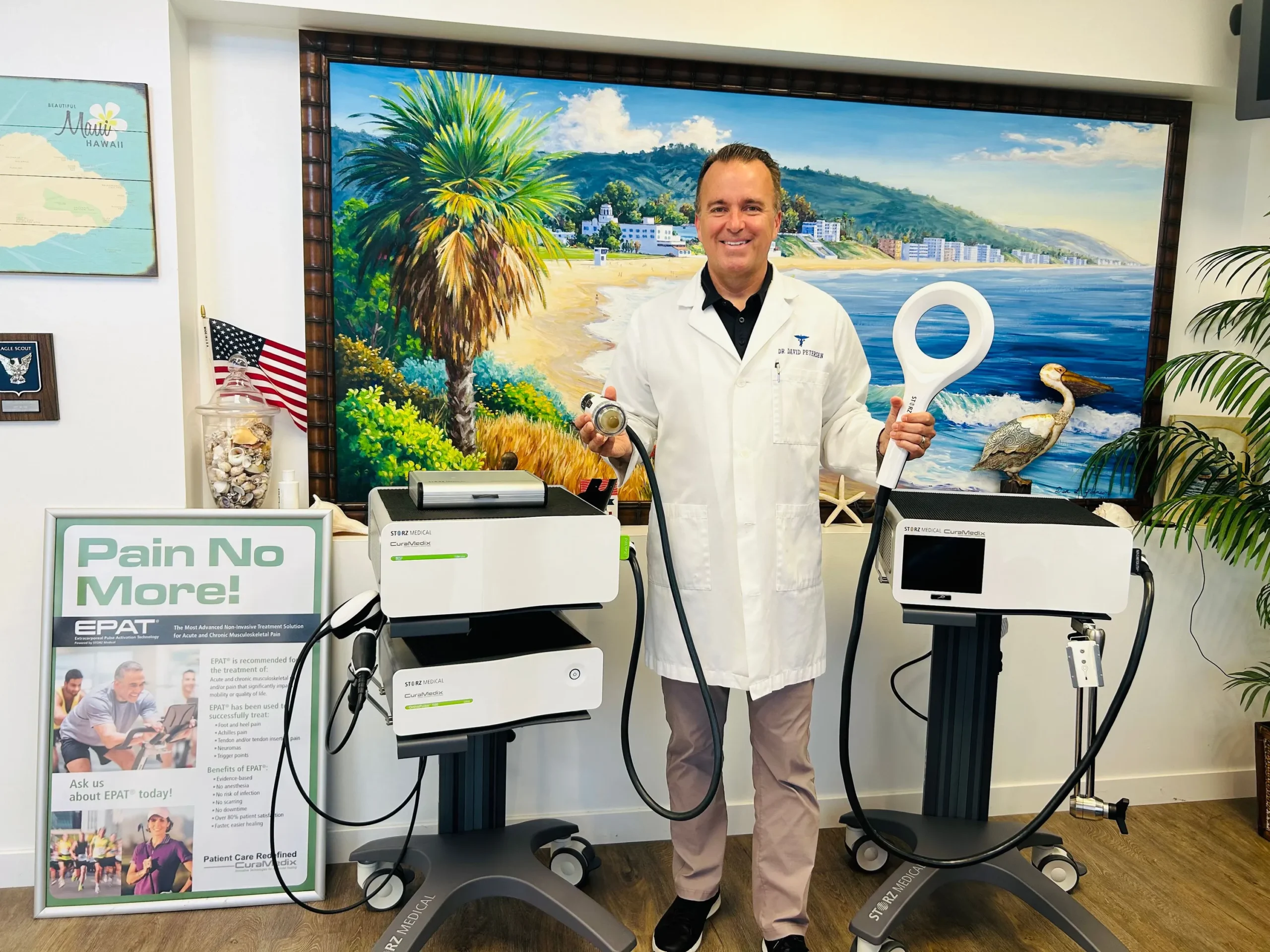
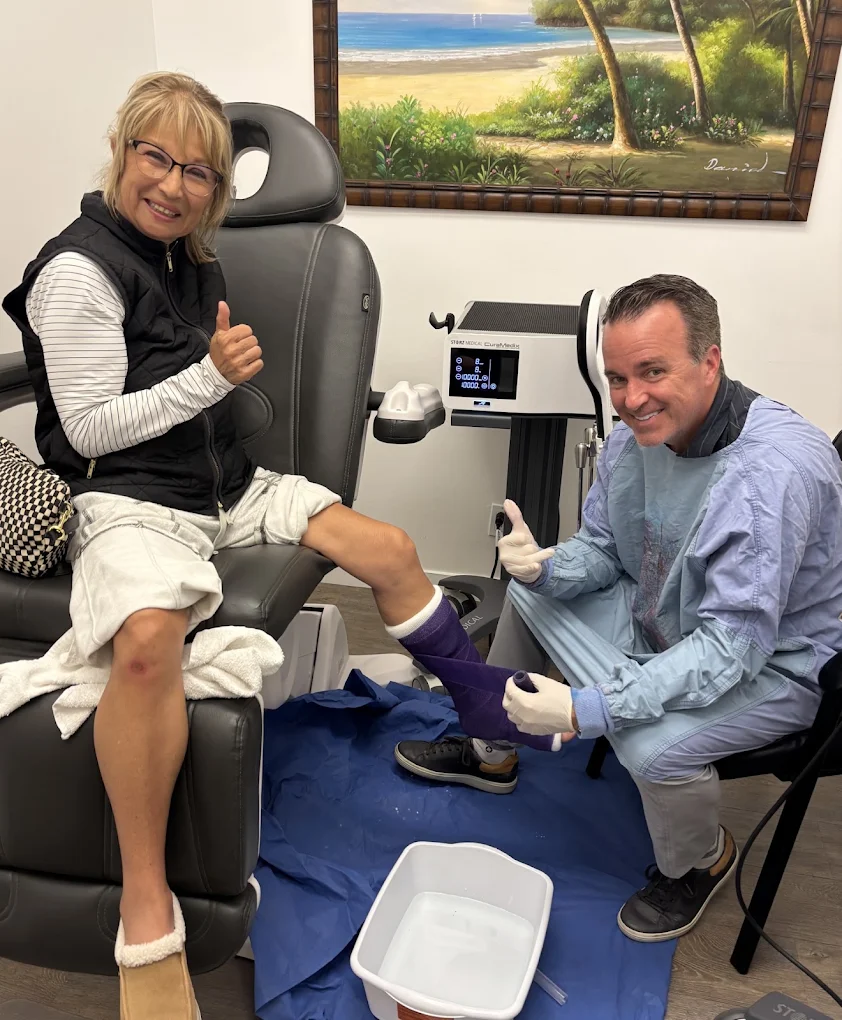
Shockwave Therapy delivers targeted acoustic energy to eligible painful or damaged tendon tissue. It may be considered for certain chronic Achilles tendon conditions that have not improved sufficiently with appropriate conservative care.
Why Choose Dr. Petersen?
Dr. David Petersen has provided podiatric care to patients in Orange County and Los Angeles since 1998. He evaluates the underlying cause of each patient’s symptoms before recommending a treatment plan.
His education and advanced training include:
- Doctor of Podiatric Medicine degree
- Residency training in podiatric medicine and foot surgery
- Two-year fellowship in advanced foot and ankle surgery
- Experience with conservative and surgical treatment options
Patients receive clear explanations about their diagnosis, available options, expected outcomes, and appropriate next steps.
Trusted by Local Patients
★★★★★ 4.9 / 5 · 120+ reviews
What Patients Are Saying


 Trustindex verifies that the original source of the review is Google.
 Trustindex verifies that the original source of the review is Google.
 Trustindex verifies that the original source of the review is Google.
 Trustindex verifies that the original source of the review is Google.
 Trustindex verifies that the original source of the review is Google.
 Trustindex verifies that the original source of the review is Google.
 Trustindex verifies that the original source of the review is Google.
 Trustindex verifies that the original source of the review is Google.
When Should You See a Podiatrist for Achilles Tendon Pain?
Schedule an evaluation when Achilles pain persists, repeatedly returns, worsens, or begins limiting walking, exercise, work, or daily activities.
Seek professional care if:
- Pain or stiffness continues despite activity changes
- The tendon becomes swollen, thickened, or increasingly tender
- Pain repeatedly returns when you resume exercise
- You have difficulty pushing off or rising onto your toes
- Symptoms begin changing how you walk
- Pain interferes with work, exercise, or daily movement
Seek prompt medical attention if you feel a sudden pop or snapping sensation, develop immediate pain and swelling, or cannot walk normally.
Frequently Asked Questions About Achilles Tendon Pain
The tendon may tighten during periods of rest, making the first steps feel stiff or painful. Symptoms may temporarily improve with movement and return after increased activity.
Running, jumping, or increasing activity too quickly can overload the tendon. Pain after exercise may indicate that the tissue is not recovering sufficiently between activities.
Mild symptoms may improve with appropriate activity changes, but persistent pain may involve ongoing irritation or tendon degeneration. An evaluation can determine the condition and appropriate next steps.
Stretching may be included in some treatment plans, but it is not appropriate for every tendon injury or stage of recovery. Have the tendon evaluated before beginning exercises that could increase stress.
This depends on your diagnosis, pain level, and activity. Continuing movements that worsen your symptoms may place additional stress on the tendon, so personalized activity guidance is important.
Recurring symptoms may result from activity changes, limited flexibility, foot mechanics, footwear, or tendon damage that has not fully recovered. Treating the contributing factors may help reduce repeated strain.
See a podiatrist when pain persists, worsens, repeatedly returns, or affects movement. Seek prompt care for a sudden pop, significant swelling, weakness, or difficulty walking.
Take the Next Step Toward Achilles Tendon Relief
If Achilles pain is limiting your walking, exercise, work, or daily activities, schedule an evaluation with Dr. Petersen. He’ll identify what may be affecting the tendon and recommend an appropriate treatment plan.