
Plantar Wart Treatment in Laguna Woods CA
Walk More Comfortably Without a Painful Plantar Wart
We identify suspicious growths on the bottom of the foot and provide appropriate treatment to reduce discomfort and address the underlying wart.

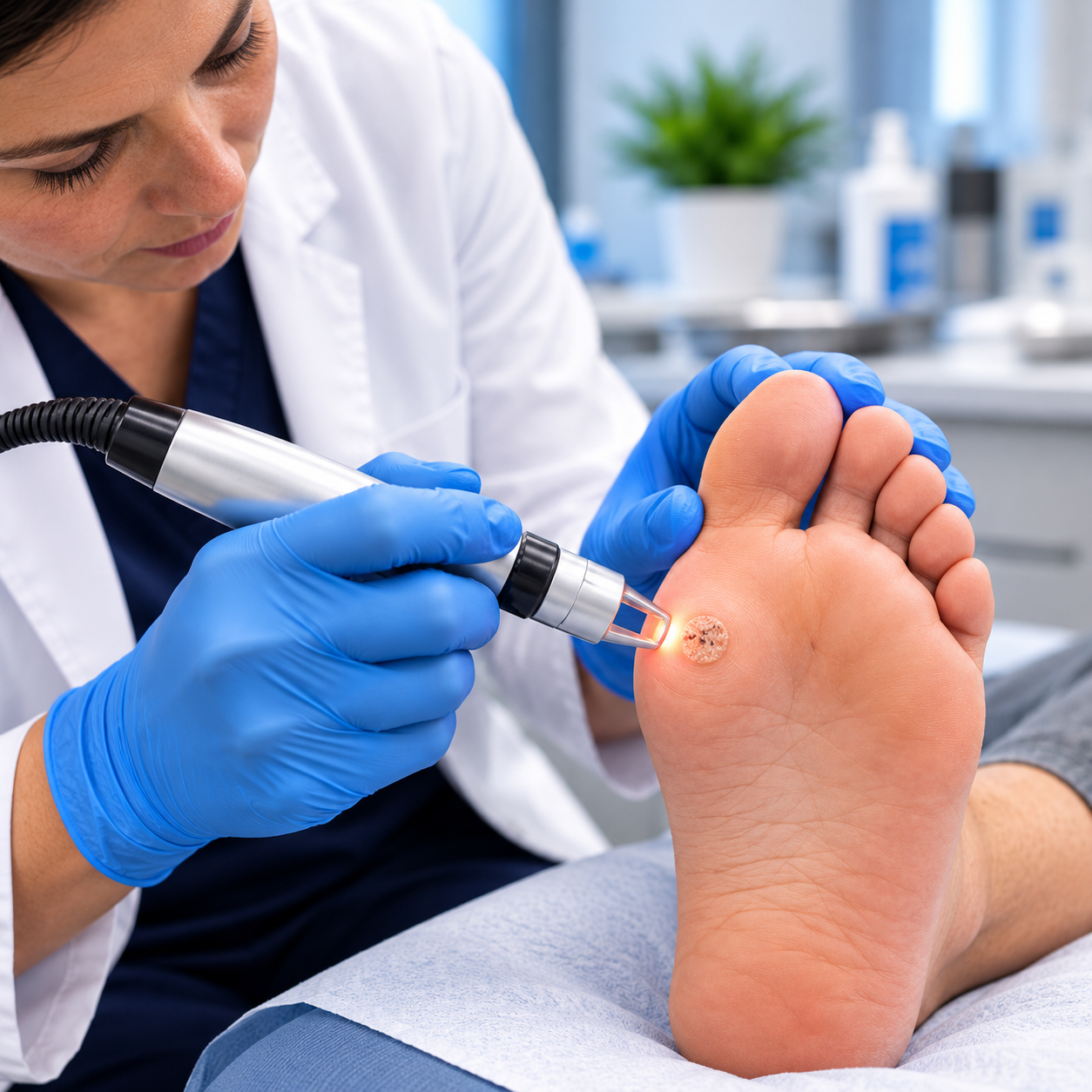
Does This Sound Familiar?
- A rough growth on the bottom of your foot
- Pain when standing, walking, or applying pressure
- A hard area that resembles a callus
- Small dark dots within the growth
- Skin lines that stop around the affected area
- One wart spreading into a larger cluster
How Do Plantar Warts Develop?
Plantar warts develop when certain strains of the human papillomavirus enter the skin. Pressure from standing and walking can cause the wart to grow inward beneath thickened skin.

Direct Contact
The virus can spread through direct contact with a wart or infected skin.
Shared Wet Surfaces
Pool areas, locker rooms, and public showers may provide environments where wart-causing viruses can spread.
Small Breaks in the Skin
Tiny cuts, cracks, or areas of irritation may allow the virus to enter the skin more easily.
Walking Barefoot
Walking barefoot in shared areas can increase your exposure to surfaces where the virus may be present.
Touching or Picking the Wart
Picking, scratching, or cutting a wart may spread the virus to nearby areas of the foot.
Individual Immune Response
Some people are more likely to develop warts after exposure because immune responses differ between individuals.
How Is a Plantar Wart Diagnosed?
Because plantar warts can resemble corns, calluses, and other skin growths, an accurate evaluation is important before treatment begins.
1. Discuss Your Symptoms
Dr. Petersen will ask when the growth appeared, whether it is painful, and if it has changed or spread.
2. Examine the Growth
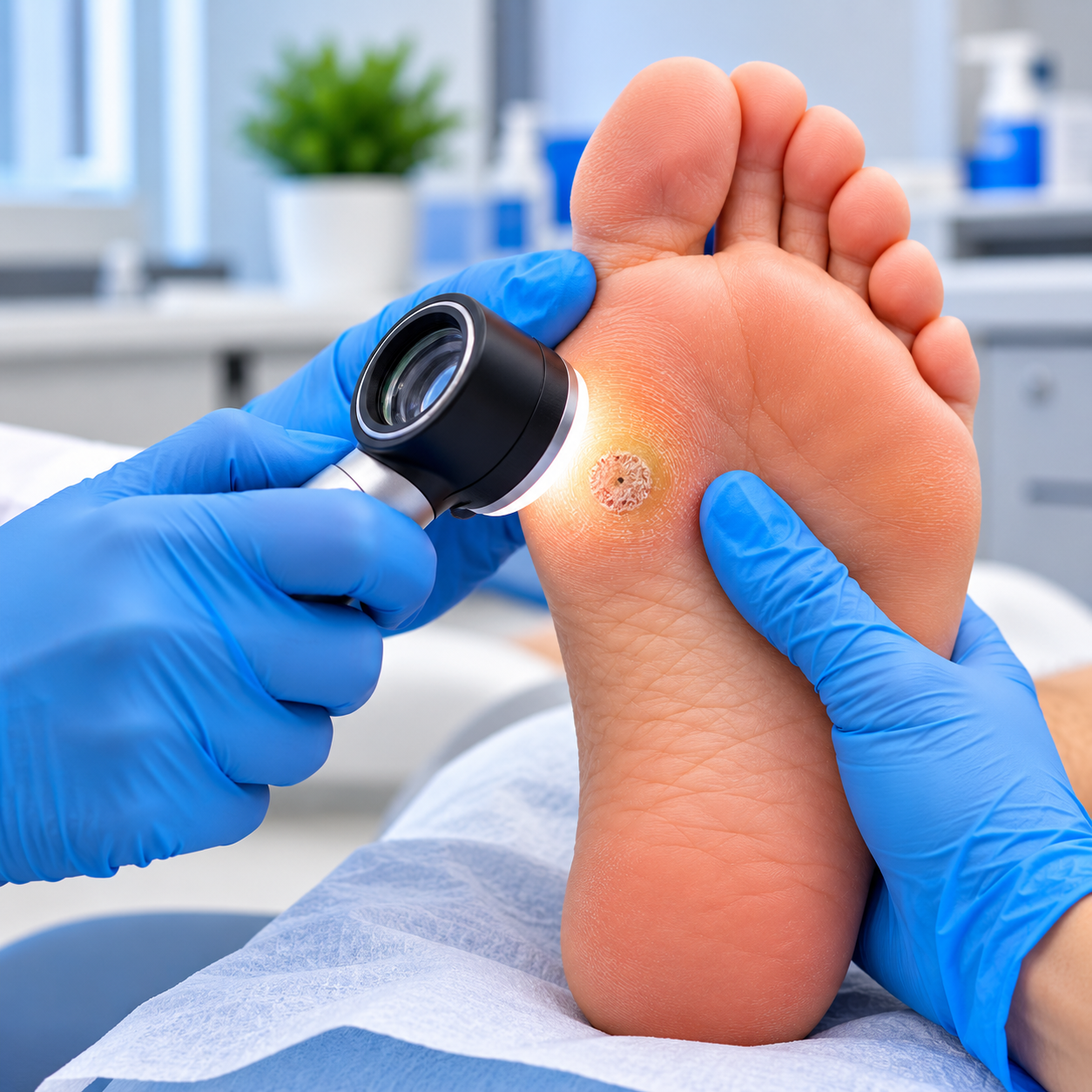
He’ll examine its location, texture, skin-line pattern, tenderness, and other features that may indicate a plantar wart.
3. Testing, if Needed
Additional testing may be recommended when the growth does not have the typical appearance of a plantar wart.
A Different Approach to Plantar Wart Treatment
We confirm that the growth is a plantar wart before recommending treatment rather than treating every thickened area as the same condition. Dr. Petersen develops a personalized plan based on the wart’s size, location, duration, discomfort, and previous care.
Treat the Wart Without Cutting the Skin
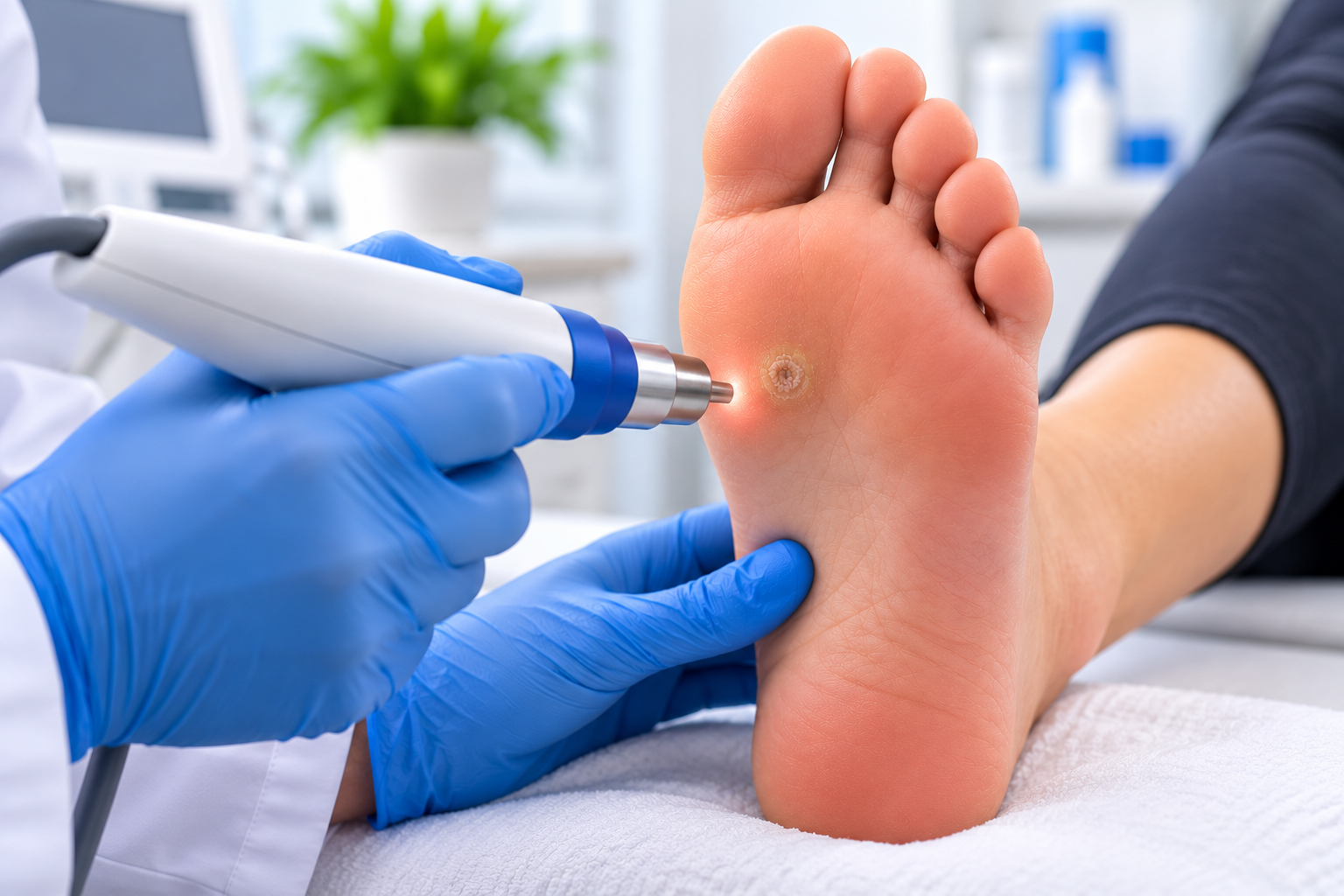
SWIFT Wart Treatment delivers controlled microwave energy to the affected area to stimulate a local immune response. It may be considered for eligible plantar warts, including persistent warts that have not responded sufficiently to previous care.
Why Choose Dr. Petersen?
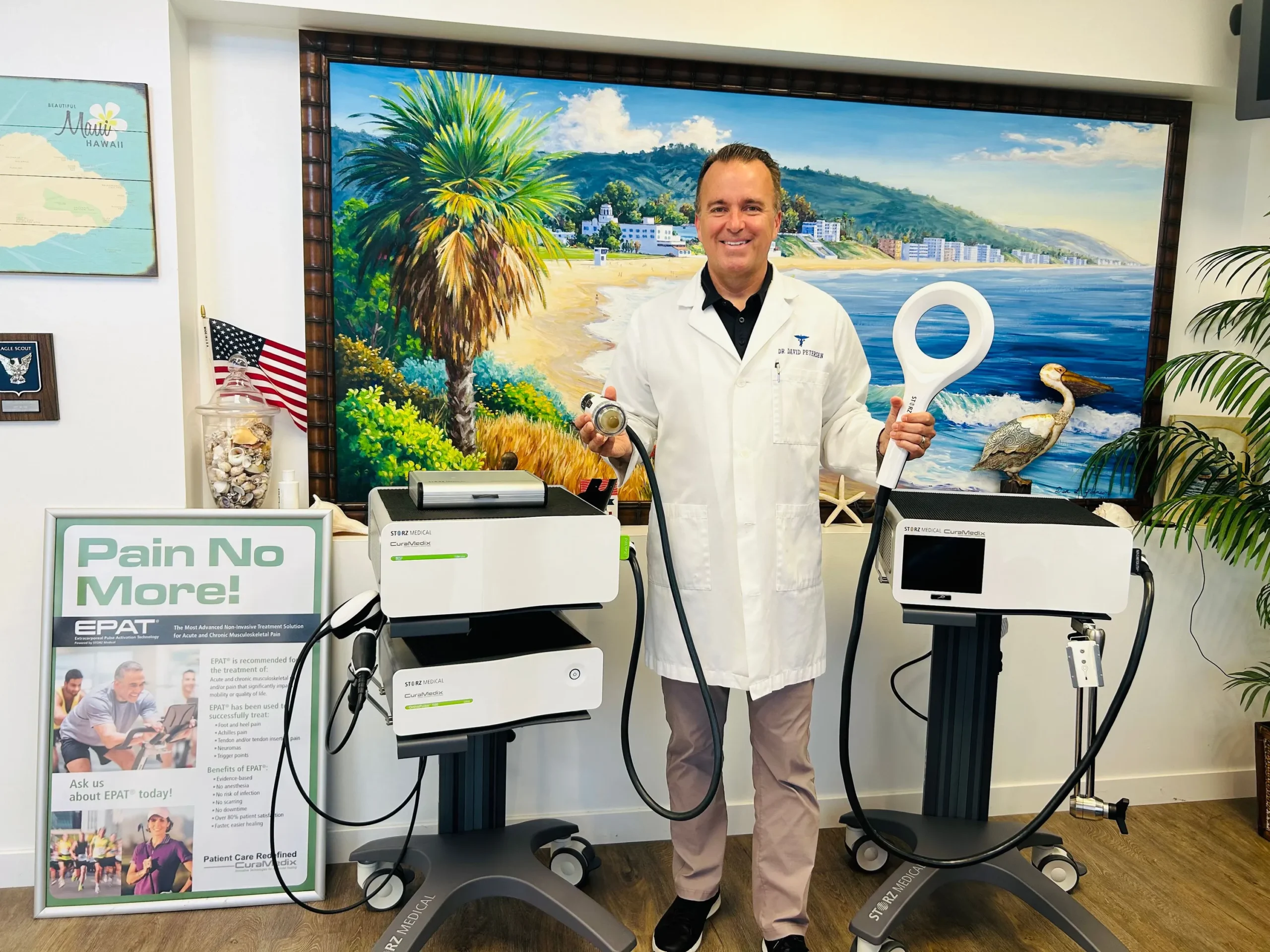
Dr. David Petersen has provided podiatric care to patients in Orange County and Los Angeles since 1998. He evaluates the underlying cause of each patient’s symptoms before recommending a treatment plan.
His education and advanced training include:
- Doctor of Podiatric Medicine degree
- Residency training in podiatric medicine and foot surgery
- Two-year fellowship in advanced foot and ankle surgery
- Experience treating common and persistent foot conditions
Patients receive clear explanations about their diagnosis, available options, expected outcomes, and appropriate next steps.
Trusted by Local Patients
★★★★★ 4.9 / 5 · 120+ reviews


What Patients Are Saying


 Trustindex verifies that the original source of the review is Google.
 Trustindex verifies that the original source of the review is Google.
 Trustindex verifies that the original source of the review is Google.
 Trustindex verifies that the original source of the review is Google.
 Trustindex verifies that the original source of the review is Google.
 Trustindex verifies that the original source of the review is Google.
 Trustindex verifies that the original source of the review is Google.
 Trustindex verifies that the original source of the review is Google.
When Should You See a Podiatrist for a Plantar Wart?
Schedule an evaluation when a suspicious growth becomes painful, spreads, repeatedly returns, or makes standing and walking uncomfortable.
Seek professional care if:
- You are unsure whether the growth is a wart
- The area becomes painful, irritated, or begins bleeding
- The growth changes in color, size, or appearance
- Additional growths appear nearby
- Previous wart treatments have not worked
- You have diabetes, poor circulation, or reduced sensation
Avoid cutting, burning, or attempting to remove a suspicious growth without a professional diagnosis.
Frequently Asked Questions About Plantar Warts
Yes. Plantar warts are caused by a virus that can spread through direct contact or contaminated surfaces. Avoid picking the wart and do not share footwear, socks, or foot-care tools.
A plantar wart may interrupt the natural skin lines and contain small dark dots, while a callus usually has skin lines running through it. Because they can look similar, a professional evaluation is recommended.
Pressure from standing and walking can push the wart inward beneath thickened skin. This can make the area feel tender or painful, particularly on weight-bearing parts of the foot.
Yes. The virus can spread to nearby skin and create additional warts or clusters. Picking, scratching, or cutting the wart may increase the risk of spreading it.
Some plantar warts may eventually clear, but others can remain, spread, or become painful. Treatment may be appropriate when the wart persists or interferes with normal activities.
You may feel brief warmth or discomfort while energy is applied to the wart. The experience varies, and Dr. Petersen will explain what to expect before recommending treatment.
See a podiatrist when the growth is painful, spreading, changing, or not improving with previous care. An evaluation is also important when you are unsure whether the growth is actually a wart.
Take the Next Step Toward Plantar Wart Relief
If a painful or persistent growth is making walking uncomfortable, schedule an evaluation with Dr. Petersen. He’ll determine whether it is a plantar wart and recommend an appropriate treatment plan.