
Plantar Fasciitis Treatment in Laguna Woods CA
Take Your First Steps Without Plantar Fasciitis Pain
We identify what may be straining your plantar fascia and provide personalized treatment options to help you walk and stay active more comfortably.


Does This Sound Familiar?
- Sharp pain under your heel in the morning
- Pain during your first steps after sitting
- Heel discomfort that improves as you begin moving
- Pain that returns after prolonged standing or walking
- Tenderness along the bottom of your heel
- Heel pain that limits exercise or daily activities
What May Be Straining Your Plantar Fascia?
The plantar fascia is a strong band of tissue that supports the arch and connects the heel to the toes. Repeated strain can irritate this tissue and cause heel pain.

Foot Structure
Flat feet, high arches, and other structural differences may place additional strain on the plantar fascia.
Unsupportive Footwear
Shoes without adequate cushioning or arch support can increase pressure on the heel and plantar fascia.
Prolonged Standing
Spending extended periods standing or walking, especially on hard surfaces, may contribute to ongoing tissue strain.
Increased Activity
A sudden increase in running, walking, exercise, or physical work can overload the plantar fascia.
Tight Calf Muscles
Limited flexibility in the calf and ankle may increase tension along the bottom of the foot.
Repeated Pressure
Continued stress on the foot without enough recovery time can make plantar fascia irritation more persistent.
How Is Plantar Fasciitis Diagnosed?
Because other conditions can produce similar heel pain, an accurate evaluation is important before treatment begins.
1. Discuss Your Symptoms
Dr. Petersen will ask when your heel pain occurs, how it affects your activities, and what care you’ve already tried.
2. Examine Your Foot and Ankle
He’ll examine the painful area and evaluate your foot structure, flexibility, movement, and response to pressure.
3. Imaging, if Needed
Digital X-rays or additional testing may be used to rule out other possible causes of your heel pain.


A Different Approach to Plantar Fasciitis Treatment
We focus on identifying and treating the source of the strain rather than simply masking your heel pain. Dr. Petersen develops a personalized treatment plan designed to support tissue recovery, improve foot function, and help you return to regular activities.
Heal Without Surgery or Injections
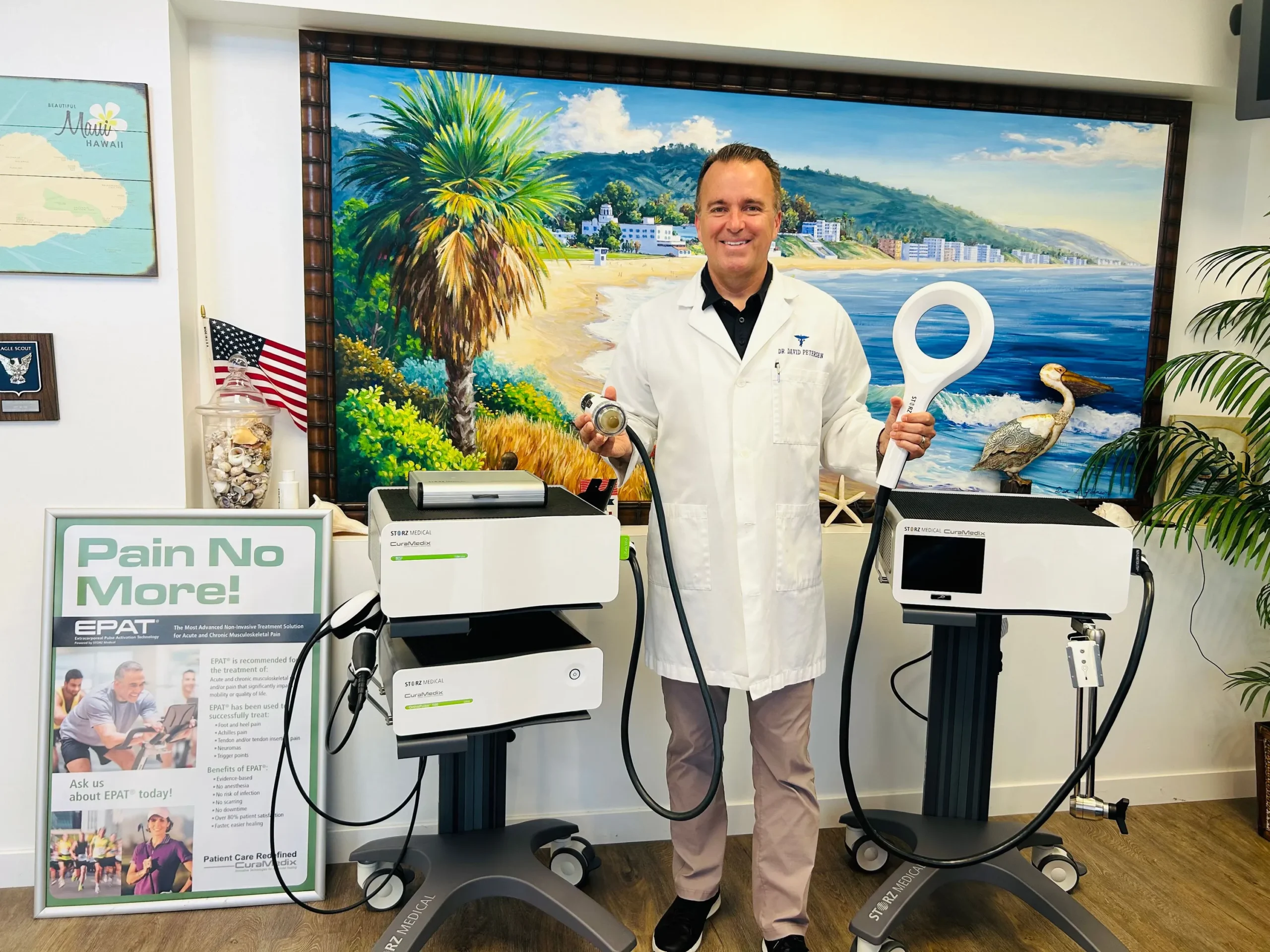
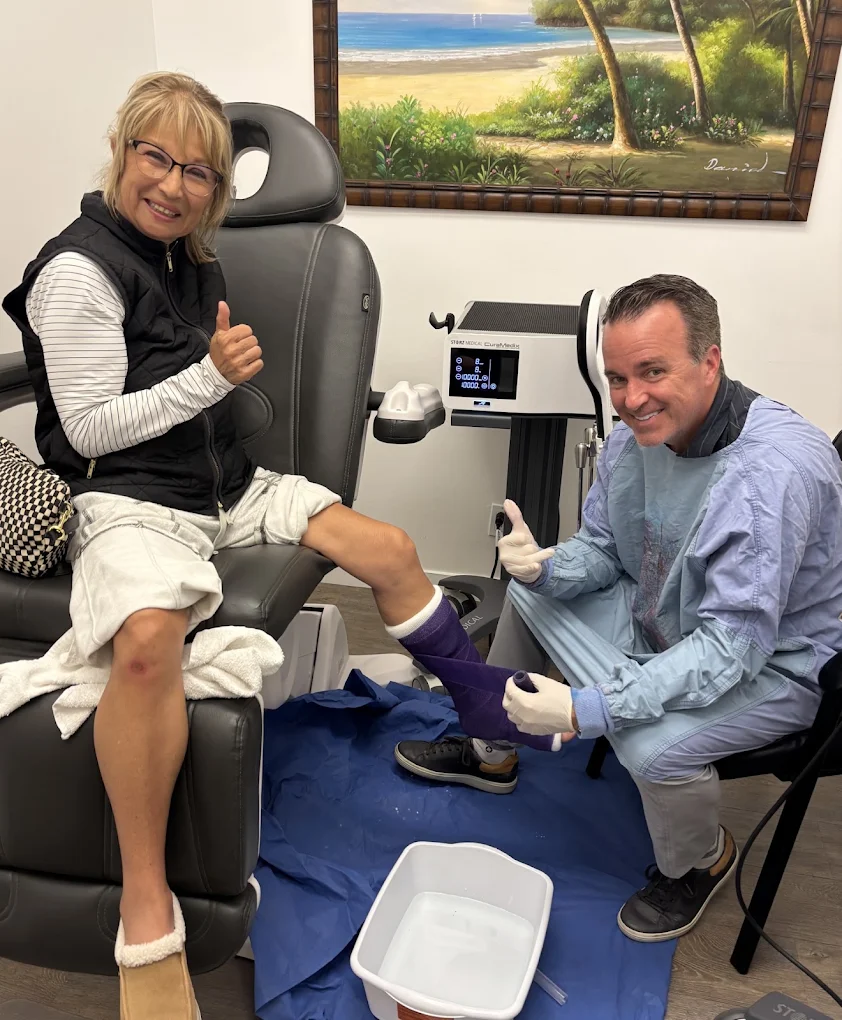
Shockwave Therapy stimulates your body’s natural healing response in eligible plantar fascia tissue without surgery, injections, or extended downtime.
Why Choose Dr. Petersen?
Dr. David Petersen has provided podiatric care to patients in Orange County and Los Angeles since 1998. He evaluates the underlying cause of each patient’s symptoms before recommending a treatment plan.
His education and advanced training include:
- Doctor of Podiatric Medicine degree
- Residency training in podiatric medicine and foot surgery
- Two-year fellowship in advanced foot and ankle surgery
- Experience with conservative and surgical treatment options
Patients receive clear explanations about their diagnosis, available options, expected outcomes, and appropriate next steps.
Trusted by Local Patients
★★★★★ 4.9 / 5 · 120+ reviews
What Patients Are Saying


 Trustindex verifies that the original source of the review is Google.
 Trustindex verifies that the original source of the review is Google.
 Trustindex verifies that the original source of the review is Google.
 Trustindex verifies that the original source of the review is Google.
 Trustindex verifies that the original source of the review is Google.
 Trustindex verifies that the original source of the review is Google.
 Trustindex verifies that the original source of the review is Google.
 Trustindex verifies that the original source of the review is Google.
When Should You See a Podiatrist for Plantar Fasciitis?
Schedule an evaluation when heel pain does not improve, keeps returning, worsens, or begins limiting your normal activities.
Seek professional care if:
- Morning heel pain continues for several weeks
- Pain returns whenever you increase your activity
- You begin changing how you walk
- Pain becomes more severe or more frequent
- You notice swelling, numbness, or tingling
- You have diabetes and develop new heel pain
Frequently Asked Questions About Plantar Fasciitis
The plantar fascia can tighten while your foot rests overnight. Your first steps stretch the irritated tissue again, which may cause sharp pain under the heel.
The plantar fascia may tighten during periods of rest. Pain can return when you stand and place weight on the foot again.
Plantar fasciitis can persist when the underlying source of repeated tissue strain is not addressed. Foot structure, activity, flexibility, and footwear may continue placing pressure on the plantar fascia.
It depends on the severity of your symptoms and the activity involved. Continuing activities that increase your pain may further irritate the tissue, so personalized activity guidance is important.
Walking barefoot can increase strain on the plantar fascia because the foot receives less cushioning and support. Hard surfaces may make the discomfort more noticeable.
Yes, symptoms can return if the factors contributing to the condition remain. Supportive footwear, appropriate stretching, activity management, and other recommendations may help reduce recurring strain.
Consider seeing a podiatrist when heel pain persists, repeatedly returns, worsens, or affects your walking and daily activities. An evaluation can confirm whether plantar fasciitis or another condition is causing your pain.
Take the Next Step Toward Plantar Fasciitis Relief
If plantar fasciitis is making your first steps, daily walks, or favorite activities uncomfortable, schedule an evaluation with Dr. Petersen. He’ll identify what may be straining your plantar fascia and recommend an appropriate treatment plan.